Skip to content

Main Navigation

ETSEIB 175 anys Escola Tècnica Superior d’Enginyeria Industrial de Barcelona - UPC
  • Home
  • The ingenuity
  • Impact stories
  • People
  • Timeline
  • ENG
    • CAT
    • ESP

Impact stories

Explore 175 years of collective memory: from the pioneers of industrial engineering to the innovations that define our future. Stories of life, science and progress.

People

The man from the air-raid shelters

Ramon Perera i Comerma (Barcelona, 1907 – London, 1988), studied at the Barcelona School of Industrial Engineering and was mainly responsible for designing and coordinating the network of air-raid shelters that protected the Catalan population during the Spanish Civil War. As head of plans and works of the Junta de Defensa Passiva de Catalunya, he…

Interior d'un refugi, Col·lecció Ramon Perera, Arxiu de la Biblioteca de Montserrat

The man from the air-raid shelters

Ramon Perera i Comerma (Barcelona, 1907 – London, 1988), studied at the Barcelona School of Industrial Engineering and was mainly responsible for designing and coordinating the network of air-raid shelters that protected the Catalan population during the Spanish Civil War. As head of plans and works of the Junta de Defensa Passiva de Catalunya, he toured the country advising on construction techniques such as zigzag galleries, which cushioned the impact of bombs. Thanks to his work, and the citizen effort that was associated with it, in Barcelona alone, more than one thousand three hundred shelters were built. Exiled in 1939, he arrived in London, where he lived until his death. Silenced during the dictatorship, today he is remembered as a symbol of engineering at the service of human life.

People

Those that broke the glass ceiling

ETSEIB has a long tradition of pioneer female engineers. Isabel de Portugal Trabal Tallada was, in 1949, the first Catalan woman to graduate in Industrial Engineering, and in 1963 the first in Spain to obtain a doctorate in this discipline. Shortly after, Laura Tremosa Bonavía was the second Catalan woman, and the third Spanish, to…

Those that broke the glass ceiling

ETSEIB has a long tradition of pioneer female engineers. Isabel de Portugal Trabal Tallada was, in 1949, the first Catalan woman to graduate in Industrial Engineering, and in 1963 the first in Spain to obtain a doctorate in this discipline. Shortly after, Laura Tremosa Bonavía was the second Catalan woman, and the third Spanish, to obtain the title of industrial engineer from ETSEIB, and later she also obtained a doctorate in this specialty, combining her professional career with feminist activism. Decades later, Laura Carnicero, Vice-President for People and Organization at SEAT, PhD in Industrial Engineering from ETSEIB, has been recognized by Forbes as one of the most influential women in Spain. In the academic field, Neus Cònsul Porras was, in 2013, the first woman to lead the ETSEIB in more than 150 years, and from 2025 Amaia Lusa García holds the position. All of them, each from their own field, have been normalizing the presence of women in a space that for too long was limited to them.

People

The management of the School

Des de 1851, l’ETSEIB ha tingut una llarga nòmina de directors que han acompanyat l’evolució de l’escola industrial més antiga d’Espanya. El primer d’ells va ser Josep Roura i Estrada, químic català que va introduïr l’enllumenat públic amb gas a Espanya. Entre els directors més rellevants posteriors hi ha Gabriel Ferraté Pascual, figura destacada en…

Portrait of Josep Roura i Estrada, director of the ETSEIB between 1851 and 1860
Portrait of Joan Agell i Torrents, director of the ETSEIB between 1860 and 1864
Portrait of Ramón de Manjarrés i Bofarull, director of the ETSEIB between 1868-1891
Portrait of Lucas Echeverría i Ugarte, director of the ETSEIB in 1891
Portrait of Antonio de Sánchez y Pérez, director of the ETSEIB between 1891-1912
Portrait of Paulino Castells i Vidal, director of the ETSEIB between 1913-1931 and 1940-1943
Portrait of Ramón Oliveras Massó, director of the ETSEIB between 1931-1933
Portrait of Gaietà Cornet i Palau, director of the ETSEIB between 1933-1936
Portrait of Antonio Robert Rodríguez, director of the ETSEIB between 1939-1940
Portrait of Patricio Palomar Collado, director of the ETSEIB between 1943-1955
Portrait of Damián Aragonés Puig, director of the ETSEIB between 1955-1963
Portrait of José de Orbaneja y Aragón, director of the ETSEIB between 1963-1969
Portrait of Pedro Ramon Moliner, director of the ETSEIB between 1972-1975
Portrait of Francesc Compta i Gonzàlez, director of the ETSEIB between 1975-1980 and 1983-1988
Portrait of Jaume Blasco i Font de Rubinat, director of the ETSEIB between 1980-1983
Portrait of Joan Peracaula i Roure, director of the ETSEIB between 1988-1991
Portrait of Ferran Puerta i Sales, director of the ETSEIB between 1991-1997 and 2001-2006
Portrait of Ramón Companys i Pascual, director of the ETSEIB between 1997-2001
Portrait of Francesc Roure, director of the ETSEIB between 2006-2013
Portrait of Neus Cónsul Porras, director of the ETSEIB between 2013 and 2021.
Portrait of Manel Mateo Doll, director of the ETSEIB between June 2021 and October 2021.
Portrait of Maria Antonia de los Santos López, acting director of the ETSEIB between October 2021 and December 2021.
Portrait of Enric Fossas Colet, director of the ETSEIB between 2021 and 2025.
Portrait of Amaia Lusa, current director of the ETSEIB

The management of the School

Des de 1851, l’ETSEIB ha tingut una llarga nòmina de directors que han acompanyat l’evolució de l’escola industrial més antiga d’Espanya. El primer d’ells va ser Josep Roura i Estrada, químic català que va introduïr l’enllumenat públic amb gas a Espanya. Entre els directors més rellevants posteriors hi ha Gabriel Ferraté Pascual, figura destacada en la modernització de l’ensenyament tècnic, i també els tres directors que es van succeir durant els difícils anys de la Guerra Civil —Santiago Rubió i Tudurí, Fidel Moncada Nieto i Josep Ballvé Martínez—, un període convuls en la història de la institució. Però la fita més rellevant no va arribar fins al 2013, quan Neus Cònsul Porras es va convertir en la primera dona a dirigir l’escola en més de 150 anys, càrrec que va exercir fins al 2021. Des del 2025, Amaia Lusa García ocupa la direcció, confirmant la creixent presència femenina al capdavant d’una institució que durant més d’un segle havia estat dirigida exclusivament per homes.

People

Illustrious engineers

Throughout its history, Catalan engineering has had figures with exceptional careers who left their mark far beyond their profession. Pompeu Fabra i Poch, an industrial engineer with a chemical background, became the organiser of the modern Catalan language without ever abandoning its technical rigour. Ferran Casablancas Planell, a self-taught technician, revolutionized the world cotton industry…

Close-up plan of Mr. Santiago Rubió i Tudurí, director of the School of Industrial Engineers of Barcelona. 1936 / 1937

Illustrious engineers

Throughout its history, Catalan engineering has had figures with exceptional careers who left their mark far beyond their profession. Pompeu Fabra i Poch, an industrial engineer with a chemical background, became the organiser of the modern Catalan language without ever abandoning its technical rigour. Ferran Casablancas Planell, a self-taught technician, revolutionized the world cotton industry with his stretch spinning system, while Santiago Rubió i Tudurí designed the first metropolitan railway in Barcelona and, later, lived in exile after directing the School of Engineers during the Spanish Civil War. Gabriel Ferraté Pascual, for his part, was a key figure in the modernization of Catalan technical education from the direction of the ETSEIB, as well as promoting the Open University of Catalonia (UOC), a pioneer in distance education in the Catalan language. All of them represent how Catalan engineering has been, at the same time, the technical, cultural and social engine of the country.

People

Engineers with a passion for history

In 1977, Guillermo Lusa promoted a group to prepare teaching in the history of science at the ETSEIB. Xavier Berenguer, Albert Corominas, Joan Masarnau, Santiago Riera and Antoni Roca participated. Santiago Riera later became professor of history of science at the University of Barcelona. He maintained his link with the ETSEIB when, for example, he…

Professors Guillermo Lusa and Antoni Roca during the presentation of the book "Història, enginyeria i compromís". 2019

Engineers with a passion for history

In 1977, Guillermo Lusa promoted a group to prepare teaching in the history of science at the ETSEIB. Xavier Berenguer, Albert Corominas, Joan Masarnau, Santiago Riera and Antoni Roca participated. Santiago Riera later became professor of history of science at the University of Barcelona. He maintained his link with the ETSEIB when, for example, he coordinated a research network on the Catalan forge.

Since 1996, the ETSEIB has been home to the Research Centre for the History of Technology (CRHT), a group that studies how technology has shaped society and how this, in turn, has conditioned engineering. Figures such as Guillermo Lusa Monforte and Antoni Roca Rosell have contributed to consolidating this discipline with academic rigour, moving it away from the anecdote and basing it on archival research. The centre promotes original research and ensures the conservation of technical cultural heritage, showing that the passion for history can coexist perfectly with the vocation of an engineer

People

The creators of the metro

Among the engineers who made the Barcelona metro possible, two figures stand out. Santiago Rubió Tudurí, who graduated from the School in 1915, was a key figure in the development of Barcelona’s transport structures during the first third of the twentieth century. In 1921 he directed and designed the first metro line to operate in…

Close-up plan of Mr. Santiago Rubió i Tudurí, director of the School of Industrial Engineers of Barcelona. 1936 / 1937

The creators of the metro

Among the engineers who made the Barcelona metro possible, two figures stand out. Santiago Rubió Tudurí, who graduated from the School in 1915, was a key figure in the development of Barcelona’s transport structures during the first third of the twentieth century. In 1921 he directed and designed the first metro line to operate in Barcelona (inaugurated in 1924). He also designed the Montserrat funicular and the Balmes tunnel, still in use by the Ferrocarrils de la Generalitat. Esteve Terrades i Illa, who graduated from the School in 1909, designed and directed the construction of the Transversal Metropolitan Railway (inaugurated in 1926), applying innovative solutions such as the adaptation of the Catalan vault to the roof of the Plaça Catalunya and Plaça d’Espanya stations.

Did you know?

Pete Seeger’s concert

Pete Seeger’s planned concert at the ETSEIB is one of the most remembered episodes of student activism during the late Franco regime. The American folk singer, known for his commitment to the spanish republican cause and his opposition to the Vietnam War, was to give a recital in the parking lot of the School on…

Article publicat al número de Juliol-Agost de 2006 de la revista Folc
Your browser does not support the video tag.
Video

Pete Seeger’s concert

Pete Seeger’s planned concert at the ETSEIB is one of the most remembered episodes of student activism during the late Franco regime. The American folk singer, known for his commitment to the spanish republican cause and his opposition to the Vietnam War, was to give a recital in the parking lot of the School on February 13, 1971, organized by the Department of Cultural Activities (DAC) with the involvement of Raimon, the Amigó brothers and Professor Jordi Llopart. The event was banned by the authorities, which led to demonstrations repressed by the police. In the wake of the suspension, Seeger offered the following day a private concert for the organizers at the Bar Llopart in Sants, in a smaller but equally significant atmosphere.

Did you know?

175 years of uninterrupted activity

During 175 years of uninterrupted activity, the ETSEIB has established itself as a benchmark in the training of industrial engineers in Catalonia. Since its foundation in 1851, the school has accompanied the great economic and technological transformations of the country, adapting its curricula to each era without ever interrupting its teaching work, not even at…

175 years of uninterrupted activity

During 175 years of uninterrupted activity, the ETSEIB has established itself as a benchmark in the training of industrial engineers in Catalonia. Since its foundation in 1851, the school has accompanied the great economic and technological transformations of the country, adapting its curricula to each era without ever interrupting its teaching work, not even at times of profound political or institutional changes. This continuity has made it a witness and protagonist of the industrial development of Barcelona, of all of Catalonia and even (for a third of a century) of all of Spain, training generations of engineers who have contributed to sectors as diverse as textiles, chemistry, energy or new technologies. Today, the ETSEIB keeps alive this legacy as one of the engineering schools with the most history and prestige in Spain.

Did you know?

The various names of the School

Since its foundation in 1851 as the Escuela Industrial Barcelonesa (Barcelona Industrial School), the school has changed its name several times: Escuela Profesional Industrial de Barcelona (Professional Industrial School of Barcelona) (1855), Escuela Superior Industrial de Barcelona (Superior Industrial School of Barcelona) (1859) and, around 1865-1866, Escuela de Ingenieros Industriales de Barcelona (School of Industrial…

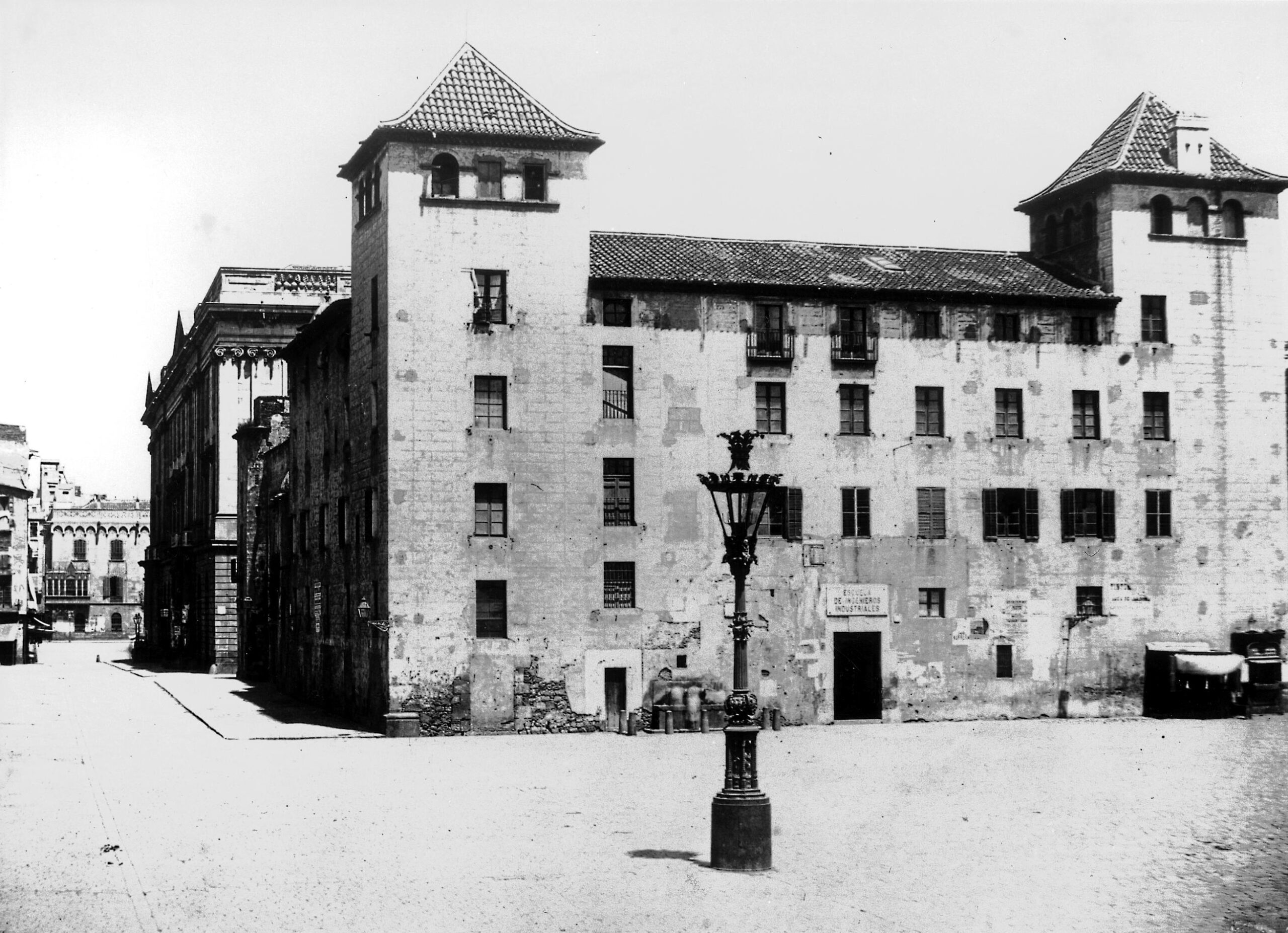
The Convent of San Sebastián, located in the current Idrissa Diallo square, a building that housed the School from its beginnings until 1873. Above the door is written “School of Industrial Engineers”.
Building of the Literary University, headquarters of the School until 1927

The various names of the School

Since its foundation in 1851 as the Escuela Industrial Barcelonesa (Barcelona Industrial School), the school has changed its name several times: Escuela Profesional Industrial de Barcelona (Professional Industrial School of Barcelona) (1855), Escuela Superior Industrial de Barcelona (Superior Industrial School of Barcelona) (1859) and, around 1865-1866, Escuela de Ingenieros Industriales de Barcelona (School of Industrial Engineers of Barcelona) or Escuela Especial de Ingenieros Industriales de Barcelona (Special School of Industrial Engineers of Barcelona).

In 1940, with the Francoist unification of the schools of Barcelona, Madrid and Bilbao, it became the Escuela Especial de Ingenieros Industriales de Barcelona (Special School of Industrial Engineers. Establishment of Barcelona), until 1947 when it regained its autonomy and its previous name. In 1957 it became the Escuela Técnica Superior de Ingenieros Industriales de Barcelona, Catalanized in 1980 as the Escola Tècnica Superior d’Enginyers Industrials de Barcelona (Superior Technical School of Industrial Engineers of Barcelona). The last change, in 1998, gave rise to the current name: Escola Tècnica Superior d’Enginyeria Industrial de Barcelona (Barcelona School of Industrial Engineering) (ETSEIB).

Did you know?

The International Exhibition of 1929

The Barcelona International Exhibition of 1929 was the showcase of a city that presented itself to the world as an exponent of modernity, at a time of great urban and technological transformation of the Catalan capital. Industrial engineers linked to the School actively participated in the assembly and in the technical projects that guaranteed the…

Fotografia de grup dels enginyers industrials assistents al banquet d'homenatge.

The International Exhibition of 1929

The Barcelona International Exhibition of 1929 was the showcase of a city that presented itself to the world as an exponent of modernity, at a time of great urban and technological transformation of the Catalan capital. Industrial engineers linked to the School actively participated in the assembly and in the technical projects that guaranteed the success of the event, contributing their knowledge in key areas for the operation of the exhibition. His speech was so outstanding that the Association of Industrial Engineers organised a tribute banquet, with the participation of Barcelona City Council and other organisations, a gesture that showed the prestige and importance that the profession had achieved in the society of the time.

Did you know?

The Universal Exhibition of 1888

The Universal Exhibition of Barcelona in 1888, inaugurated on 20 May with Queen Maria Cristina, was a major milestone in the history of the city. Barcelona, the great industrial capital of Spain, had a well-connected port, a powerful cotton textile industry and, above all, the technical support of the School of Industrial Engineers: its engineers…

Cartell de l'Exposició Universal de Barcelona de 1888

The Universal Exhibition of 1888

The Universal Exhibition of Barcelona in 1888, inaugurated on 20 May with Queen Maria Cristina, was a major milestone in the history of the city. Barcelona, the great industrial capital of Spain, had a well-connected port, a powerful cotton textile industry and, above all, the technical support of the School of Industrial Engineers: its engineers played a decisive role in the design and construction of the event’s infrastructures, providing the technical knowledge that made the project possible.

During the course of the Exhibition, several scientific meetings were held, one of which was the International Engineering Congress, chaired by Lluís Rouviere, who also chaired the Association of Industrial Engineers and was also the director of the public services of the Exhibition. The Congress, which was attended by a notable delegation from the Society of Civil Engineers of France, was a support for the consolidation of the prestige of our industrial engineering.

The Exhibition transformed the city: it urbanised the Parc de la Ciutadella, opened new streets, improved Passeig de Colom and left the Arc de Triomf. Visitors found industrial and artistic pavilions, balloon rides, roller coasters and theater. The local, national and international press celebrated its success as a symbol of the resurgence of Catalonia.

Did you know?

Albert Einstein’s visit to Barcelona

In February 1923, Albert Einstein visited Catalonia at the invitation of a group of Catalan scientists led by the industrial engineer Esteve Terrades i Illa. Einstein gave lectures at the Institute of Catalan Studies and the Royal Academy of Sciences and Arts, and his visit aroused an overflowing enthusiasm among the city’s engineers, architects and…

Acte d’homenatge a Einstein organitzat per l’Associació d’Estudiants de la Universitat Nova (Universitat Industrial) el 28 de febrer de 1923”.

Albert Einstein’s visit to Barcelona

In February 1923, Albert Einstein visited Catalonia at the invitation of a group of Catalan scientists led by the industrial engineer Esteve Terrades i Illa. Einstein gave lectures at the Institute of Catalan Studies and the Royal Academy of Sciences and Arts, and his visit aroused an overflowing enthusiasm among the city’s engineers, architects and scientists. This episode of Einstein’s visit has been studied and disseminated in our School by Professor Antoni Roca in the history of engineering courses, becoming a symbol of the Catalan scientific and cultural vocation.

Innovation

BCN eMotorsport

BCNeMotorsport was founded in 2007 by 13 ETSEIB students as ETSEIB Motorsport, with their first car, the CAT01 marking the beginning of their participation in Formula Student, with combustion cars. Over the years, they have continued to grow and innovate, achieving national and international recognition. In 2011 they designed and built the first electric car…

El primer cotxe de Fórmula Student de l'escola que va competir amb i sense pilot.

BCN eMotorsport

BCNeMotorsport was founded in 2007 by 13 ETSEIB students as ETSEIB Motorsport, with their first car, the CAT01 marking the beginning of their participation in Formula Student, with combustion cars.

Over the years, they have continued to grow and innovate, achieving national and international recognition. In 2011 they designed and built the first electric car in Spain, the CAT05e, paving the way for electric mobility in the Formula Student competition. In 2018 they became the first team in the competition to present an autonomous car, the Driverless UPC, with ETSETB students. Thus, ETSEIB Motorsport and Driverless UPC (ETSETB) merged into BCN eMotorsport, to continue innovating. The last car presented was the CAT17x in 2025.

Innovation

The 3D printing laboratory

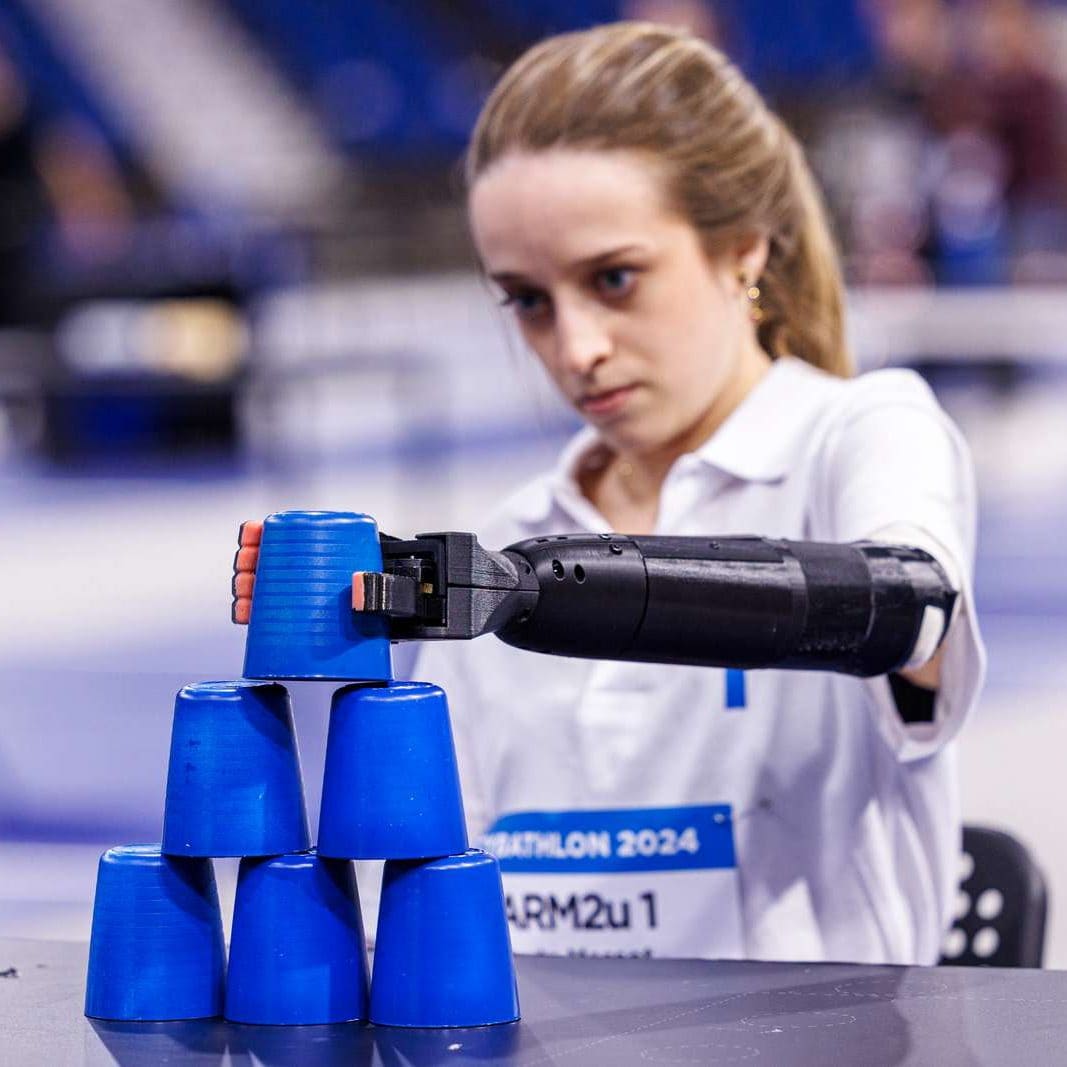
The incorporation of 3D printing into the ETSEIB represents a qualitative leap in training and research in industrial engineering. Its applications range from teaching and prototyping to high-level competitions, such as the BCN Motorsport team, which manufactures parts for its Formula Student car with this technology. Also noteworthy is ARM2u, the biomedical engineering team that…

Person using an arm thesis developed by the ARM2u student team, which participates in the Cybathlon competition.

The 3D printing laboratory

The incorporation of 3D printing into the ETSEIB represents a qualitative leap in training and research in industrial engineering. Its applications range from teaching and prototyping to high-level competitions, such as the BCN Motorsport team, which manufactures parts for its Formula Student car with this technology. Also noteworthy is ARM2u, the biomedical engineering team that designs and manufactures a transradial and myoelectric arm prosthesis with 3D printing, with which it has competed in the Cybathlon Challenge, the main international assisted prosthesis competition.

In addition, the school participates in the dissemination of additive manufacturing in Catalonia: the CIM UPC organizes a conference on 3D printing in the ETSEIB Assembly Hall, within the framework of more than three decades of collaboration between the academic world, industry and society. The link with the School goes back a long way: the first headquarters of the CIM was precisely the ETSEIB, and its first director, Rafael Ferré Masip, was a teacher. Thus, the ETSEIB is at the forefront of engineering education, bringing students closer to the technological challenges of the present.

Innovation

Pegaso Truck

The Pegaso Z-210 is a prototype truck manufactured by the Spanish company ENASA in 1955, preserved today in the lobby of the Barcelona School of Industrial Engineering (ETSEIB). The vehicle was presented in September 1955 at the Paris Motor Show with an innovative proposal. The Z-210 was one of the first non-Italian European trucks to…

1r pla del camió pegaso a l’ETSEIB

Pegaso Truck

The Pegaso Z-210 is a prototype truck manufactured by the Spanish company ENASA in 1955, preserved today in the lobby of the Barcelona School of Industrial Engineering (ETSEIB). The vehicle was presented in September 1955 at the Paris Motor Show with an innovative proposal. The Z-210 was one of the first non-Italian European trucks to adopt a bidirectional configuration, which allowed, according to the Spanish regulations of the time, a payload of 12,000 kg for a total authorized weight of 20 tons. His presence at the ETSEIB makes him an exceptional witness to post-war Spanish industrial engineering.

Innovation

Seat 600

In 1950, in the midst of Francoism and autarky, the Sociedad Española de Automóviles de Turismo, S.A. (SEAT) was founded, with the aim of motorising Spain. Although the regime preferred to decentralize industry outside Catalonia, the factory was eventually set up in Barcelona. The decision was motivated by the availability in the city of well-trained…

Imatge publicitària del SEAT 600

Seat 600

In 1950, in the midst of Francoism and autarky, the Sociedad Española de Automóviles de Turismo, S.A. (SEAT) was founded, with the aim of motorising Spain. Although the regime preferred to decentralize industry outside Catalonia, the factory was eventually set up in Barcelona. The decision was motivated by the availability in the city of well-trained professionals, capable of meeting the technical needs of a factory of the dimensions planned for SEAT. In 1957 the iconic SEAT 600 arrived, which revolutionised the country’s mobility and culminated the company’s objective: to put Spain on wheels.

Innovation

Graham Bell System

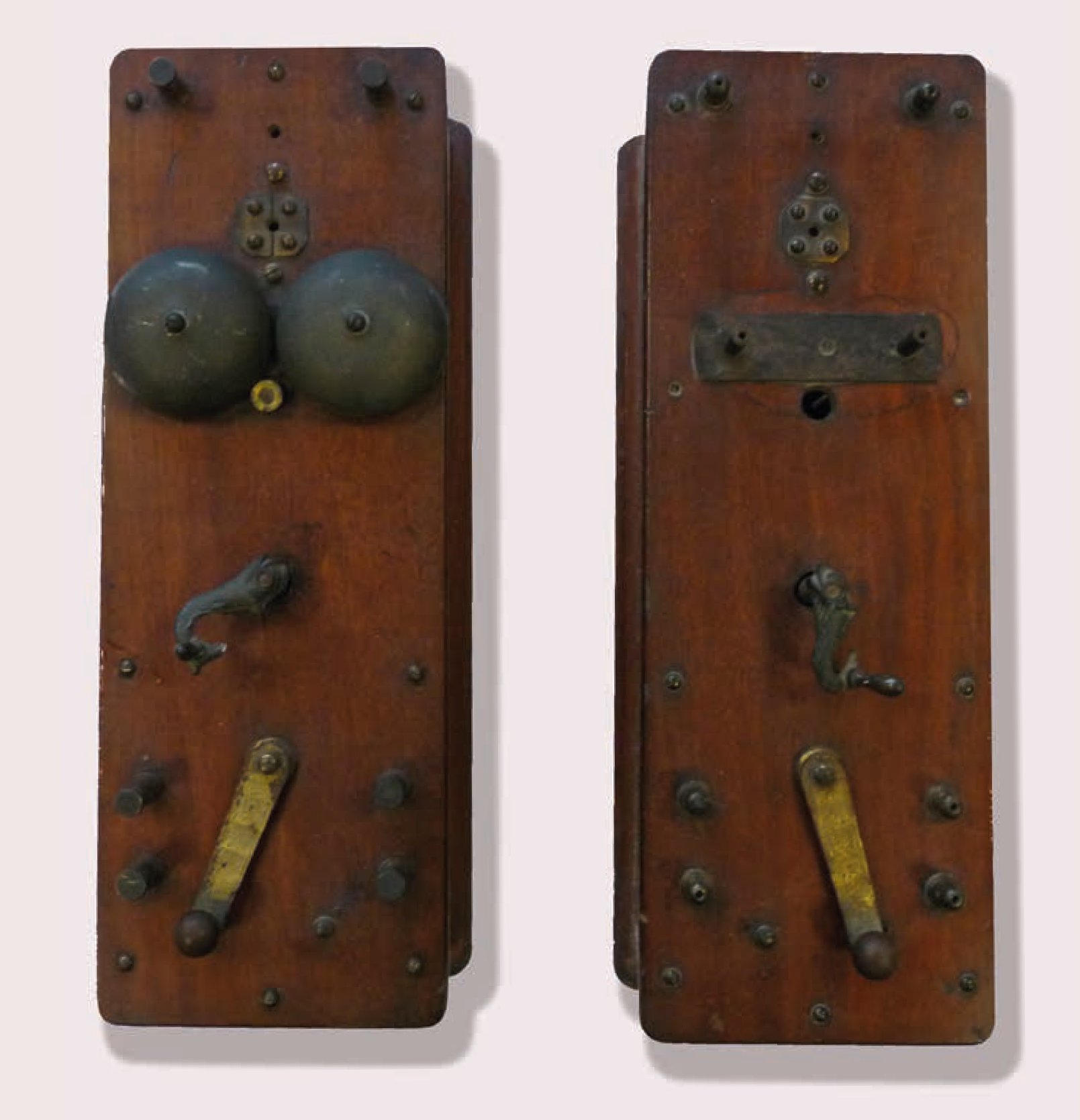
On December 16, 1877, the School of Industrial Engineers of Barcelona hosted the first telephone communication in the Iberian Peninsula. The Dalmau family’s company had imported two Bell devices, patented the previous year by Alexander Graham Bell, and installed them in two rooms of the School to demonstrate how the new invention works. Ten days…

Telephones from 1878 probably manufactured in Barcelona by Francesc Dalmau i Fill. They were the protagonists of one of the first telephony tests in mainland Spain.

Graham Bell System

On December 16, 1877, the School of Industrial Engineers of Barcelona hosted the first telephone communication in the Iberian Peninsula. The Dalmau family’s company had imported two Bell devices, patented the previous year by Alexander Graham Bell, and installed them in two rooms of the School to demonstrate how the new invention works. Ten days later, on 26 December, the Dalmau family managed to connect Barcelona with Girona in the first long-distance call in Spain.

The School's headquarters

The Diagonal building (1964-present)

At the end of the fifties, the growth of Barcelona and the thrust of developmentalism made the old Can Batlló site small and outdated. Despite its emblematic character, the Clock Building was originally an adapted factory site and not a technical education centre, which limited the installation of state-of-the-art laboratories and facilities. To solve this…

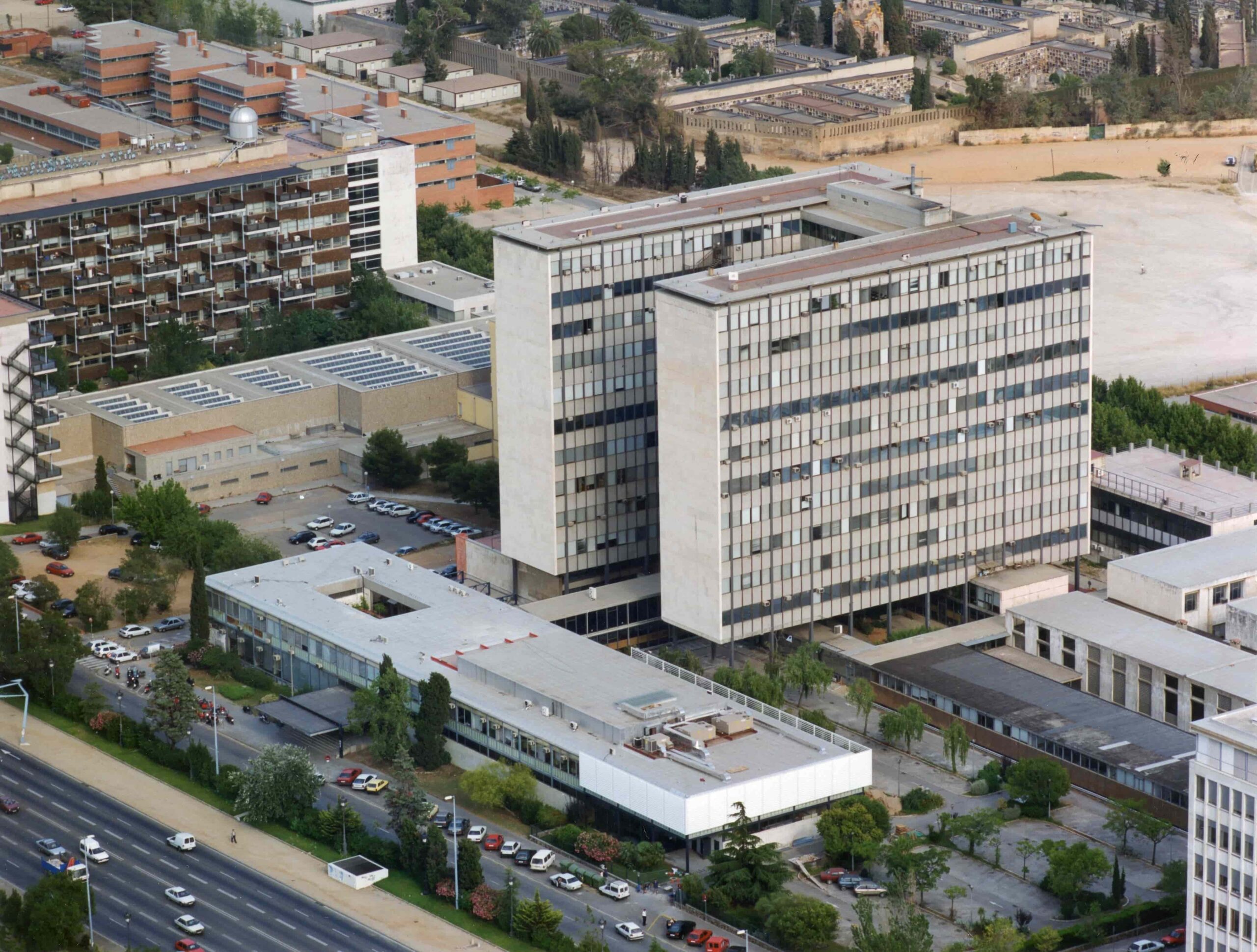
Views of the School building in Pedralbes.

The Diagonal building (1964-present)

At the end of the fifties, the growth of Barcelona and the thrust of developmentalism made the old Can Batlló site small and outdated. Despite its emblematic character, the Clock Building was originally an adapted factory site and not a technical education centre, which limited the installation of state-of-the-art laboratories and facilities. To solve this shortcoming, in 1959 the architect Robert Terradas Via designed the current headquarters on Avenida Diagonal, centred on the so-called H building. Opened in 1964, the new complex was a historic milestone: for the first time in more than a century, the School had a headquarters specifically designed for the training and research of future industrial engineers.

The School's headquarters

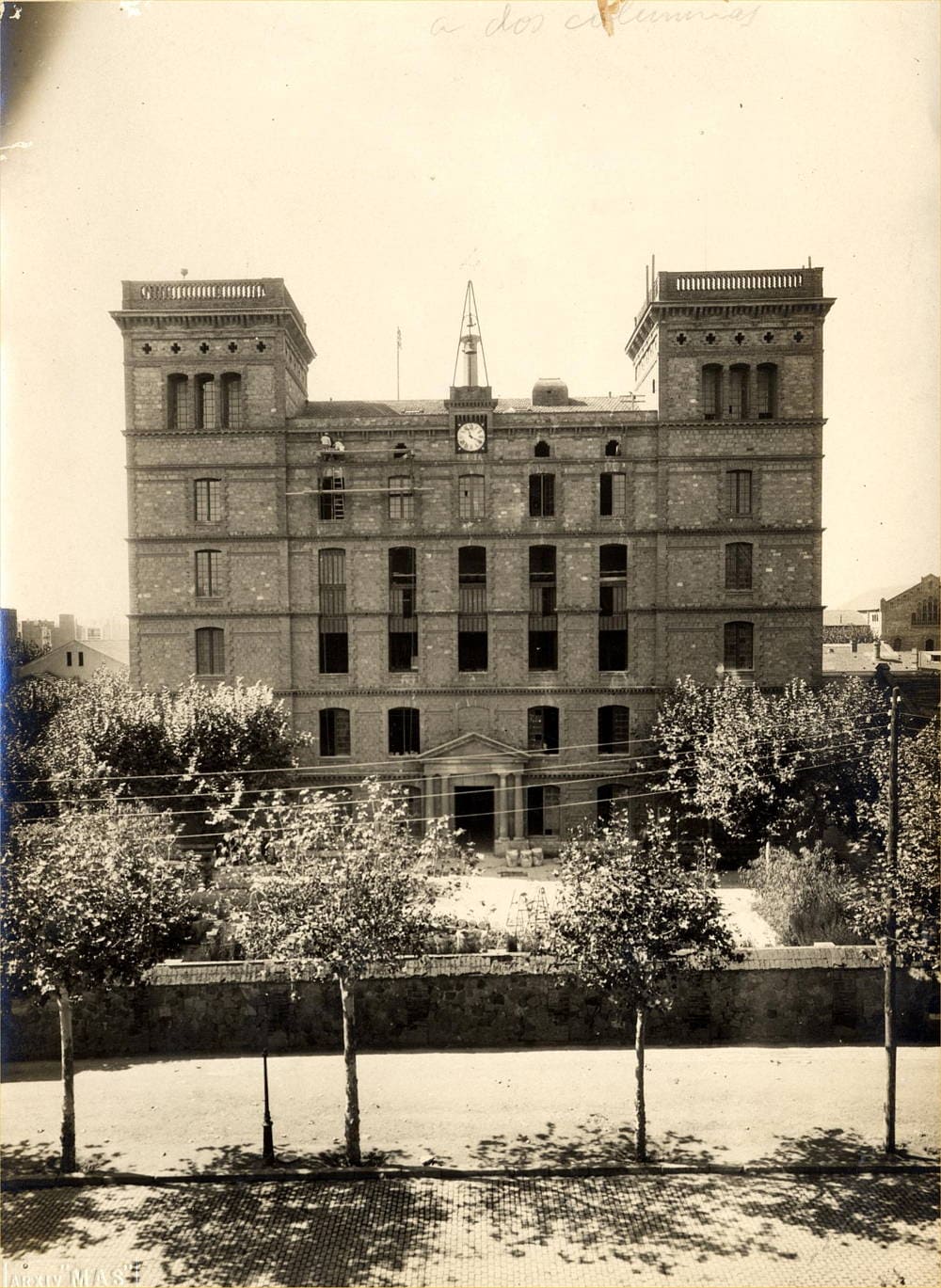
Can Batlló and the Clock Building (1927-1964)

In 1927, Barcelona’s technical training took a qualitative leap forward with the move to the site of Can Batlló, an old textile factory that was adapted to house the Industrial School. The heart of this complex, inaugurated as the future new Industrial School by King Alfonso XIII in 1908, was the Clock building.This venue made…

Façade of the School of Engineering. AGDB. Collection: Barcelona Provincial Council. Author: Mas. Facade of the School of Engineers, current Clock Building, 1926 (https://www.diba.cat/en/web/recintes/edifici-del-rellotge1)

Can Batlló and the Clock Building (1927-1964)

In 1927, Barcelona’s technical training took a qualitative leap forward with the move to the site of Can Batlló, an old textile factory that was adapted to house the Industrial School. The heart of this complex, inaugurated as the future new Industrial School by King Alfonso XIII in 1908, was the Clock building.
This venue made it possible to overcome the purely theoretical teaching model to bet on practice and experimentation in reference test laboratories. For almost forty years, the Rellotge building was the emblem of the Catalan technical elite.

The School's headquarters

The historical building of the University (1874-1927)

During the Christmas holidays of 1873, the School moves from the old convent of San Sebastian to the new building of the University of Barcelona. This new construction, located beyond the old medieval walls, symbolized the modernity of a Barcelona that saw in higher education the pillar of its future. The engineers coexisted in this…

Building of the Literary University, headquarters of the School until 1927

The historical building of the University (1874-1927)

During the Christmas holidays of 1873, the School moves from the old convent of San Sebastian to the new building of the University of Barcelona. This new construction, located beyond the old medieval walls, symbolized the modernity of a Barcelona that saw in higher education the pillar of its future. The engineers coexisted in this iconic space and in its cloisters with students of sciences and humanities, a fact that served at that time to dignify the profession of industrial engineer and place it at the same academic level as the rest of university studies. The School would be there until 1927, when the needs of practical spaces and laboratories would make it necessary to move to the industrial site of Can Batlló.

Innovation

Ictíneo II

In 1864, the Ictíneo II, Narcís Monturiol’s second and most ambitious submarine, built in the port of Barcelona, was launched. The ship incorporated an unprecedented innovation in the history of navigation: a boiler-based submersible mechanical propulsion system that used a chemical mixture capable of generating heat without emitting CO₂, becoming the first mechanically propelled underwater…

Rèplica de l'Ictíneo II, ubicat al Port de Barcelona

Ictíneo II

In 1864, the Ictíneo II, Narcís Monturiol’s second and most ambitious submarine, built in the port of Barcelona, was launched. The ship incorporated an unprecedented innovation in the history of navigation: a boiler-based submersible mechanical propulsion system that used a chemical mixture capable of generating heat without emitting CO₂, becoming the first mechanically propelled underwater vessel in history. In his first report on underwater navigation (1860), Monturiol acknowledged the advice he had received from several professors at the Industrial School (Josep Roura, Pere Roqué, Llorenç Presas, etc.).

Although the project could not continue due to lack of funding and was scrapped in 1868, Monturiol’s work was included in his posthumous treatise Ensayo del Arte de navegación bajo del agua (1891), considered the first manual of underwater navigation in history and recognized as a direct influence for the inventors and naval engineers who succeeded him.

The School's headquarters

The old convent of Sant Sebastià (1851-1873)

The Barcelona School of Industrial Engineering, originally known as the Barcelona Industrial School, began its journey in 1851 in the old convent of Sant Sebastià, located in what is now Idrissa Diallo Square. The School was constituted by grouping most of the chairs that the Board of Trade had been establishing since 1769. The new…

The old convent of Sant Sebastià (1851-1873)

The Barcelona School of Industrial Engineering, originally known as the Barcelona Industrial School, began its journey in 1851 in the old convent of Sant Sebastià, located in what is now Idrissa Diallo Square. The School was constituted by grouping most of the chairs that the Board of Trade had been establishing since 1769. The new school taught industrial and commercial education, but also offered individual subjects for those who wanted to improve their skills in specific technical aspects.
This space, which has now disappeared, was the cradle where Catalan engineering went from being an artisanal knowledge to a first-class academic and scientific discipline.

ETSEIB 175 anys Universitat Politècnica de Catalunya
With the support of: Ajuntament de Barcelona
Escola Tècnica Superior d’Enginyeria Industrial de Barcelona
Campus Diagonal Sud
Av. Diagonal, 647 08028 Barcelona
  • LinkedIn
  • Instagram
  • Facebook
  • YouTube
  • UPC directory
  • Contact form
  • Credits