During the first third of the twentieth century, industrial engineering consolidated its prestige and influence on the economic and institutional life of the country. Engineers participate in the development of infrastructures, in the modernization of industry and in the public debate on the economic future of Catalonia. The School reinforces its role as a training centre for a technical elite, in a stage of growth that will be cut short with the outbreak of the Spanish Civil War.
The Board of Trustees and a new governance
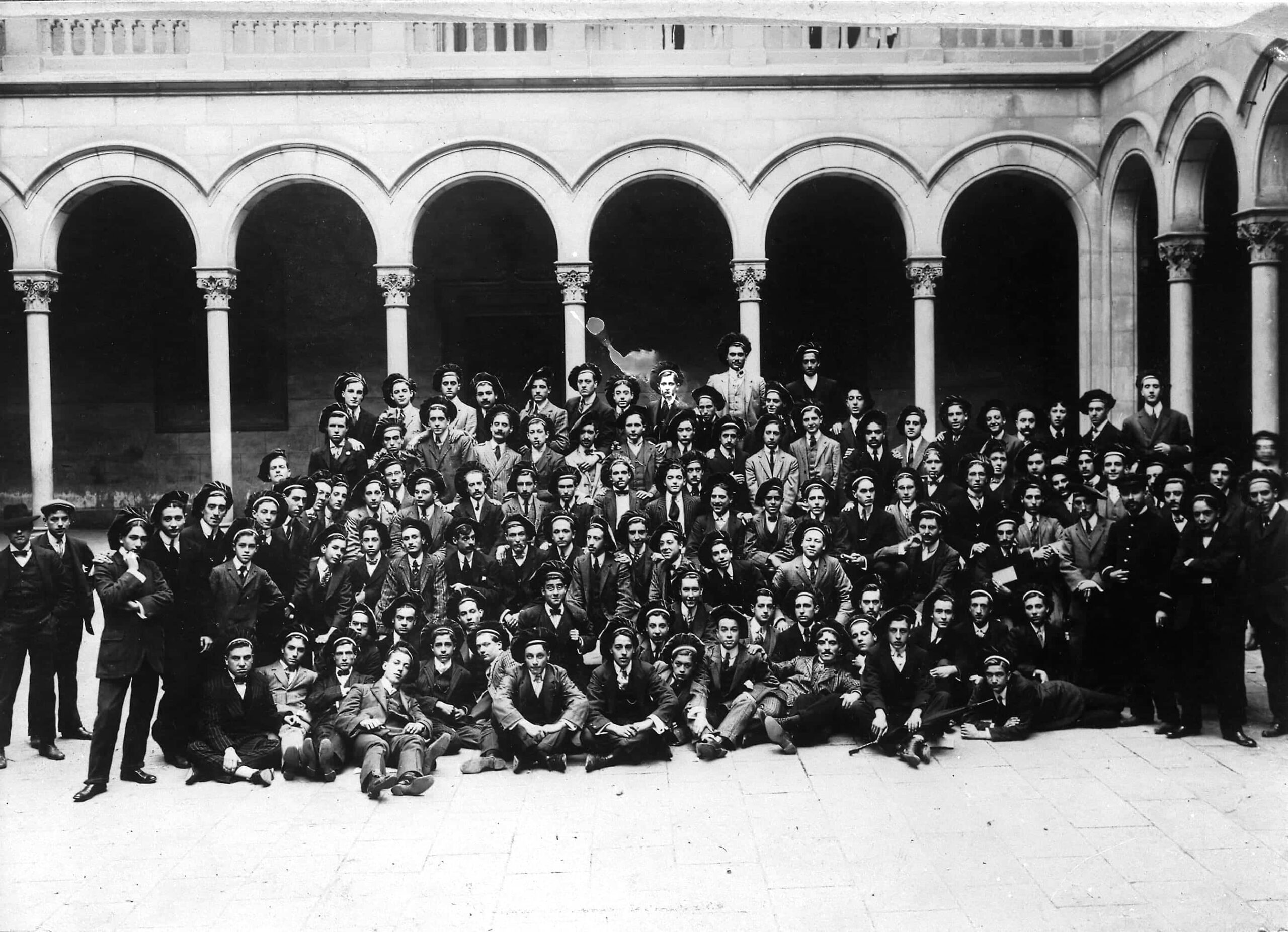
In 1904, the Board of Trustees of the Industrial School was created, a body that integrates the public administration and the business sector. The aim was to create a General Centre for Technical Education where a series of linked courses would be taught, ranging from education for workers and apprentices at the School of Arts and Crafts to higher industrial engineering. This union strengthens the link with the productive fabric and promotes a stage of academic renewal. The commitment grew with the Mancomunitat de Catalunya (1914-1923), which saw the School as a tool to promote the development and modernization of the country.
“In 1906, the project for the new Industrial School took a very important step forward, when the Board of Trustees decided to buy the old textile factory in Can Batlló, which had recently fallen into disuse.”
Arrival at the Clock Building
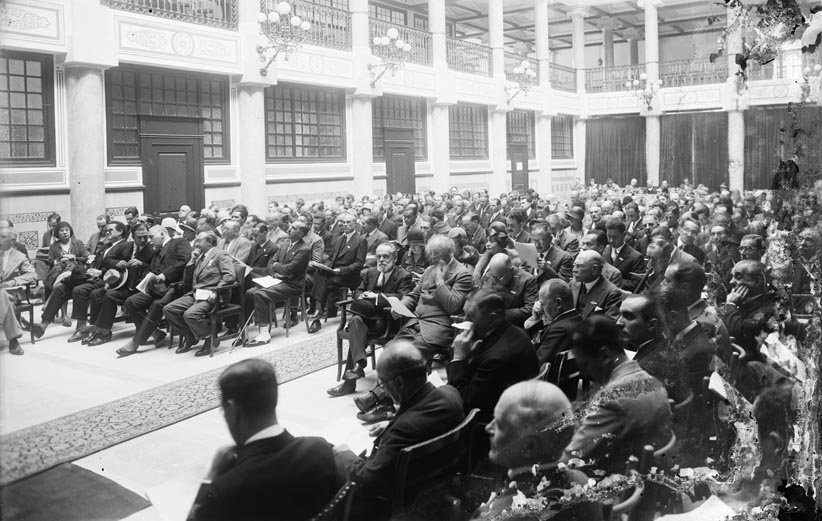
In 1927, the engineering studies were finally moved to the grounds of the Industrial School of Barcelona, installed in the old Batlló factory, on Urgell Street. The engineers settled in the Clock Building, the main building of the complex, inaugurated that same year in an act presided over by King Alfonso XIII. Over time, the building will become the emblematic headquarters of the School and one of the most recognizable spaces for technical training in Barcelona.
The Barcelona metro
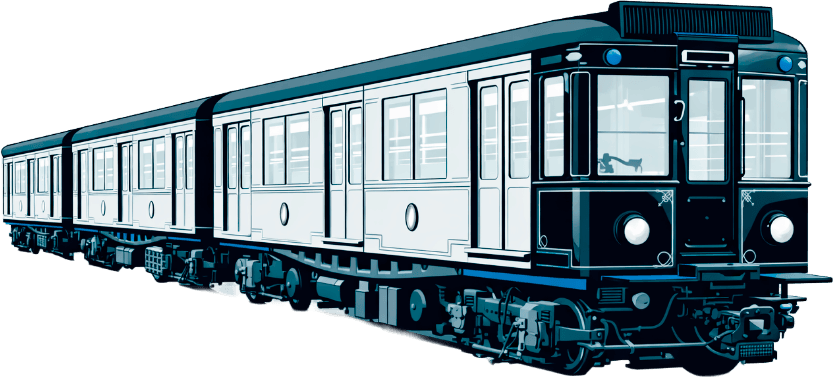
Barcelona’s urban transformation is also happening underground. Engineers trained at the School participate in the construction of the metro. Santiago Rubió i Tudurí, future director of the institution during the Spanish Civil War, led the works of the Gran Metro, inaugurated in 1924. Esteve Terradas, also a former student, promoted the Metro Transversal, which came into service in 1926.
An international showcase
The Barcelona International Exhibition (1929) functions as the showcase of a city that presents itself to the world as an exponent of modernity. Industrial engineers linked to the School actively participate in the assembly and in the technical projects that guarantee the success of the event. His intervention is so outstanding that the Association of Industrial Engineers of Barcelona decides to officially recognize his work with a tribute banquet.

Saving lives in times of war
During the Spanish Civil War, the School put its knowledge at the service of civil protection. The industrial engineer Ramon Perera is responsible for the construction of Barcelona’s network of air-raid shelters, which protect the population from bombings. On the other hand, various teachers of the School give lectures and prepare brochures that teach the population to protect themselves from bombs and gases. At the same time, the centre’s laboratories provide technical solutions to the war industry, such as the search for anti-knock agents to guarantee the reliability of aviation engines and avoid accidents in mid-flight.
